| Philips PMR- "Keeping In Touch With Testing" |
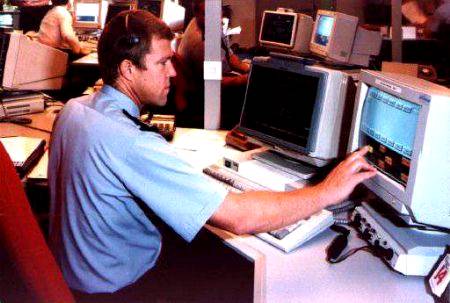 |
| A Typical Philips PMR Project - A Police Control Room System |
| Philips is a major force in the world of communications. Philips Private Mobile Radio (PMR) employs approximately 1,200 staff at its Headquarters in Cambridge where it designs, manufactures and supports a complete range of communications products. These encompass mobile and portable radios, pagers, base stations and control room equipment, including complete turnkey systems. The software which drives these products is increasingly the critical element in delivering services to the end user. |
| Customers for Philips PMR systems include the emergency services, public utilities and commercial operations. Such customers regard fast, reliable, and efficient mobile communications as essential, because in many cases lives may depend on the rapid transmission of information. |
| Background |
| Philips PMR have a well defined software development process, based firmly on the well known V lifecycle model and certified to ISO 9001/TickIT. However, in an effort to further improve quality whilst reducing development costs, in mid 1993 the company started to review the area of software testing. |
| Findings indicated that bugs were being detected during system testing which could have been detected much earlier in the development lifecycle, when they could have been rectified more cheaply and easily. The logical conclusion was that the testing of code at earlier stages was not sufficiently rigorous and that a number of defects were being carried over to subsequent stages of testing. |
| Having recognised the problem, Philips decided to look for a tool to help formalise their approach to unit and integration testing and to provide information on the quality of their code. After reviewing the commercially available tools, Cantata was chosen and made available for project use in early 1994. |
| Cantata In Action |
| The first major project to use Cantata was a large control room system for a major utility company. This communications system integrates digital telephony with mobile radio services, allowing reliable communications between the control room operators and staff in the field. This project represented an ideal opportunity to use Cantata in anger. Having made this decision, strict unit and integration testing with Cantata was specified in the quality plan. |
| Early Findings |
| Before the testing phase of the project began, a number of staff took part in a one-day Cantata training course to provide a basic understanding of the tool's operation. |
| When testing began in earnest, it was quickly discovered that the flexible nature of Cantata allowed them to integrate the tool within their existing development environment by creating a number of simple custom utilities which enhance the use of the product and promote the rapid development of test scripts. |
| The immediate benefit of using Cantata was the feedback of quantifiable quality information in the form of test coverage and code complexity measurements. A set of project-wide quality criteria were set for a selection of Cantata metrics; code was not allowed to be issued until these criteria were met. |
| During the early stages of testing a variety of Cantata static analysis metrics were evaluated to see if a correlation could be established between code complexity and the number of problems experienced with a module. By this empirical process, the Philips development team identified a group of metrics, including Hansen's Cyclomatic Number, as providing a good indication of whether or not a module was likely to have a larger than average number of defects. This information was used by the project as an indication of whether the code required further review, or in more extreme cases, a rewrite. |
| Further Developments |
| As with all projects, the testing of the small proportion of large modules was inordinately labour intensive. In order to reduce the effort required, an additional utility was created which allowed the tester to take a test specification, in the form of a text file, and to create the Cantata test script from it automatically. |
| Benefits |
| Having now used Cantata extensively for unit and integration testing, the main benefits seen are a measurable increase in the quality of code produced together with an improvement in the visibility of the testing achieved. Problems have been isolated much more quickly and have been located at their source, leading to reduced costs. |
| In the view of a Philips spokesman: "Cantata has clearly picked up coding issues during module testing which would not previously have been discovered until system testing". The project's findings are now being used to refine Philips' overall development strategy. |
| The Future |
| Testing with Cantata continues apace. Although much of the unit testing has been done, integration testing is well under way and the project is now using Cantata for testing at the system level. |
| For future reference, a complete set of static metrics has been collected for each module and is being maintained with the code. Philips' intention is to perform a detailed analysis of this information at the end of the project to see if any further relationship between Cantata metrics and other process metrics, such as 'defect rate' and 'effort required', can be established. |
| The success achieved by the Philips development team has been monitored closely and Cantata is now being considered for use on a number of forthcoming projects including several major developments. |
| In Summary |
| Philips PMR regards rigorous, formalised testing at all levels as a 'must'. Cantata is a preferred testing tool for achieving this allowing them to produce high quality code whilst keeping costs in perspective. |
| IPL wishes to thank Philips PMR for permission to report their experiences with Cantata and wishes them every success with their projects. |


