| Case Study from Data Systems & Solutions |
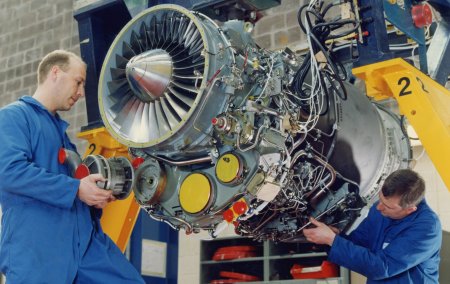 |
| The Adour Engine - Used in the Jaguar Aircraft |
| For this case study, we profile some recent work from a world-leading independent software safety and verification specialist, the Software Engineering and Assessment Services (SEAS) group of Data Systems & Solutions. |
| Data Systems & Solutions was formed in early 1999 as a joint venture between Rolls-Royce plc and Science Applications International Corporation (SAIC). It brings together complementary businesses which draw on the project management, engineering, information technology and systems integration skills of its two parents. This combination of experience and resource has produced an exceptional new company, focused on delivering high-quality, world-beating information technology products and services. The SEAS business unit within Data Systems & Solutions is at the forefront of high-integrity software systems engineering applications. SEAS' work with AdaTEST has been previously featured in a Testing Times case study (see the Rolls Royce and Associates case study). In this case study, we look at its use of Cantata++ on three C++ projects. |
| Rolls-Royce Adour - DECATS |
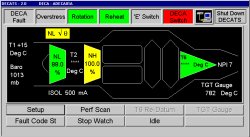 The first project was to supply a test system for the Rolls-Royce Adour Mk 106 gas turbine engine which powers the Jaguar strike aircraft. The project was known as DECATS (Digital Engine Control Amplifier Test Set). It takes the form of a ruggedized PC which can be linked via an RS-422 port to the engine controller. The DECATS extracts data mainly in the form of engine temperatures and speeds, and then performs a variety of sophisticated analyses and tests. Examples of these include calibration of cockpit instruments and timed engine accelerations. The DECATS can also be used to perform adjustments to key engine datums and for the off-line analysis of engine fault code data. |
| The software for DECATS was produced entirely in C++ by Data Systems & Solutions, and presented certain challenges in its verification. The system was assigned a Safety Integrity Level of 'C' according to the DO-178B standard. This equates to a 'Major Failure Condition' if the system goes wrong. The standard requires that the software should be unit tested and evidence of coverage at statement and branch levels provided. In fact, in the interests of efficiency, the DECATS software architecture was partitioned into 'Safety-Related', 'Other Application Modules', and MFC classes (mainly relating to the user interface). A decision was made to fully unit-test all safety-related modules, and to selectively unit-test the other code modules depending on their complexity. This was judged by reference to recognised complexity metrics, and how algorithmically detailed the modules were. |
| Mike Ferguson was the Data Systems & Solutions engineer tasked with selecting a suitable tool for the verification activities. According to him, "Previous good experience with the IPL AdaTEST and Cantata tools made Cantata++ an obvious tool to evaluate". Evaluation and training were carried out during late 1998, and Cantata++ was selected for the project in March 1999. |
| Two specific features of Cantata++ proved very popular with the engineers. Simon Prior particularly praised its ability to get inside the classes being tested using the 'Friends' technique so that internal ("white box") data could be both set and checked. The other key Cantata++ facility was 'Wrapping', which allowed a class to be tested independently of all other class interfaces. Prior says, "Without this, difficult external conditions not directly influenced by our code, such as memory allocation errors, may have been difficult to simulate." |
| In terms of testing strategy, the Data Systems & Solutions engineers are very happy to endorse the general principle of testing C++ classes by hierarchical integration. They also support the Harrold principle* which requires re-testing of base functionality when testing in the context of a derived class. In addition to unit testing, Cantata++ also proved useful during system testing, by measuring code coverage. This was carried out on the entire system and helped identify 'gaps' in the system test sets. A surprise result of the coverage analysis was to expose some lines of redundant code that were later removed. |
| Prior also praised both the usability of the tool and the service provided by IPL. "The integration of Cantata++ within the Microsoft Visual C++ environment was pleasing and easy to use, and the technical support team were 100% effective in terms of speed, accuracy and general helpfulness." |
| Railway Signalling - Westinghouse |
| The ability of Cantata++ to provide coverage and metric analysis also came in useful in the second example. This was a project to conduct system acceptance tests on a railway signalling configuration tool for Westinghouse Signals. The customer had provided the test specifications, but Data Systems & Solutions were required to provide code metrics, determine the coverage and report any areas of code not exercised. This was previously undertaken using a number of proprietary tools, but Cantata++ was able to provide all of the necessary features in one integrated package that proved easier and more cost-effective to use. |
| Once again, the system was in C++ running on Windows. The product being tested had a complex GUI, so the testing itself was driven by a GUI Test tool, with Cantata++ running in the background. Jason Pinn, the engineer involved with the Unit Testing, reports "Although some minor problems were encountered with Cantata++, the IPL support staff have been very good at providing timely solutions". |
| Nuclear Reactor Test System |
| For the final Data Systems & Solutions project, we turn to the nuclear industry. The company was awarded a contract to carry out an independent assessment of the safety systems for a nuclear power plant. Part of this work has involved the construction of a Dynamic Test System (DTS) for a Primary Reactor Protection System (PRPS). This work has been carried out in C++ using a development process guided by the IEC 880 software safety standard. Once again, Cantata++ played a crucial role at various levels: the static analysis metrics helped Data Systems & Solutions engineers identify the modules requiring special attention, and coverage analysis of the system tests allowed them to complete the work to a high level of confidence. |
| The principal Data Systems & Solutions engineer in charge of development work was Karl Aspinall. He comments, "The use of Cantata++ has proved very worthwhile. We have experienced no problems with it, and that is what you need from a test tool." |
| IPL is grateful to the Data Systems & Solutions SEAS team for their participation in this Case Study. We wish them well with their ongoing work. |
| *For more information on the Harrold concepts on testing OO/C++ software, see the IPL paper at /pdf/p0833.pdf. |


